Could You Really Live to 194? Scientists Say There's a Wall We Can't Cross
Imagine curing every disease and stopping every sign of aging. According to a new study, you would still run out of time. Here is why.
StudentCalc Editorial
Science & Lifestyle
7 min read · October 2026
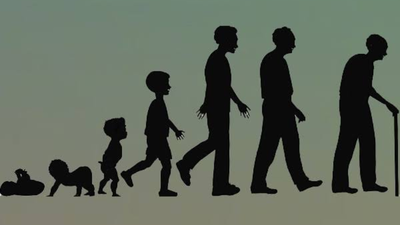
If we lived twice as long, what would we do with all that time?
Picture your 100th birthday. Now picture your 150th. Your great-great-grandchildren are blowing out candles you can barely count, and you are still walking to the kitchen on your own to cut the cake.
It sounds like science fiction. But a team of researchers has just done the math on how far the human body could go, and the answer is stranger and more humbling than "forever." They say that even in a perfect future, where medicine solves nearly everything that makes us old, there is one wall we cannot walk through.
That wall sits somewhere between 146 and 194 years. And honestly, the more I read about it, the more I felt two things at once: a little bit of wonder, and a little bit of a lump in my throat.
1. The Experiment: What If We Fixed Everything?
The study comes from researchers linked to the Skolkovo Institute of Science and Technology in Russia, and it was published in the journal npj Aging. Instead of asking how long we live today, they asked a bolder question: if we somehow cured the usual suspects behind aging, what would still be left to kill us?
So they built a mathematical model. In it, the classic causes of aging are switched off, and only one quiet process keeps running in the background. Think of it like tuning a car until every part is perfect, then finding out the engine still wears down a tiny bit with every single mile.
Today, most of us can expect to live into our seventies or eighties. The model says the ceiling could be more than double that. That is a huge number. But it is still a number, and that is the point.
2. The Quiet Culprit Inside Every Cell
The villain here is something called somatic mutations. These are tiny, random typos that creep into your DNA over a lifetime. They are not inherited from your parents and you cannot see or feel them. Every time a cell copies itself, there is a small chance something goes slightly wrong.
One typo means nothing. Thousands of them, stacking up quietly over decades, are another story. Eventually the instructions that keep a cell working become too messy to follow.
Even if we cure everything else, the body still keeps a tiny, unstoppable tally of its own wear and tear.
What makes this finding feel so personal is that it is not about a disease you can avoid or a habit you can fix. It is just what happens when living things keep living.
3. Why Your Skin Can Heal but Your Heart Can't Start Over
Here is the part that stayed with me. Not every part of your body is equally vulnerable. Organs like the liver and skin are constantly renewing themselves. Old, damaged cells get replaced by fresh ones, so in theory those tissues could keep going for an extremely long time.
Your brain and heart are different. Their cells mostly do not divide and replace themselves the way skin does. The ones you were given are the ones you carry through life, collecting small bits of damage along the way.
According to the researchers, that is what creates the bottleneck. In their model, a person with no genetic wear at all could reach a median lifespan of around 1,759 years. Add somatic mutations back in, and that figure collapses to roughly 156 years. Same body, same medicine, one quiet difference.
And yes, the study also mentions a theoretical maximum of about 627 years under wildly unlikely conditions. But the authors are clear that no real person should expect anything close to that.
4. So Is This Good News or Bad News?
It depends on how you look at it. If you hoped science was close to handing us immortality, this is a gentle but firm "not quite." The study suggests that living forever is probably out of reach, no matter how clever our medicine becomes.
But it is also a map. By pointing at the brain and heart as the true bottlenecks, the researchers are showing future scientists exactly where to aim. If we ever learn to protect or repair those cells, the ceiling itself might move.
It is also worth being honest about what this is not. It is a mathematical model, not a promise. Nobody is saying you will live to 194, and nobody is saying we know how to cure every other cause of aging. It is a "what if," built to understand the limits.
5. The Question I Can't Stop Thinking About
When I first read the number, my reaction was not "I want that." It was a strange pause. A hundred and ninety years is longer than anyone I have ever loved has lived. It would mean watching the world change more times than I can imagine, and saying goodbye to more people than I want to think about.
Maybe that is the quiet gift hidden inside this research. If life were endless, would we still call a Sunday afternoon with family precious? Would we still say "let's do it this year" if there was always another year?
Wanting more time is deeply human. But so is understanding that time is what gives moments their weight.
What We Can Take From This Today
You do not need to wait for futuristic medicine to make your years count. The things we already know help people live longer and better, like staying active, eating well, sleeping enough, and keeping close friends nearby, matter just as much today.
Science may eventually stretch the finish line further away. Until then, the best use of the time we have is the oldest advice there is: spend it on people and things that you would be glad to have spent it on.
Maybe 194 years is possible one day. Maybe it is not. Either way, today is the only part of it you are certain to have.
Source: Efimov, E., Fedotov, V., Malaev, L., Khrameeva, E. E., & Kriukov, D. (2026). Somatic mutations impose an entropic upper bound on human lifespan. npj Aging.
Health disclaimer: This article is for general informational purposes and does not replace professional medical advice. The figures discussed come from a theoretical model and are not a prediction for any individual.